
At a glance
Base vehicle: 2023 Renault Trafic LWB Colour: Silver Conversion: Bespoke Sleeps: Two Belted seats: Four Roof: Standard roof with MaxxFan Deluxe Build time: Two weeks Built for: Solo travel, work and weekends
The brief
Not every campervan needs a pop top, a full kitchen and four berths. This one was built for one person, with a clear idea of what he'd use it for and an equally clear idea of what he wouldn't.
The client works around the country and is often away overnight on site visits. Hotels near a job are expensive, frequently booked out, and rarely where you'd choose to stay. What he wanted was the option to finish a day on site, park up, cook something, sleep properly and be back on the job first thing — without a hotel bill and without a forty-minute drive each way. Then at the weekend, the same van becomes a quick, easy escape: throw a bag in on Friday, go somewhere, come back Sunday.
That gave us a brief with four parts:
1. Keep it simple and keep the cost down.
He was clear that this was a working van first and a camper second. He didn't want to pay for anything he wouldn't use.
2. No pop top.
He travels alone. A pop top adds cost, weight and height for a second double bed he'd never sleep in. Keeping the standard roof also keeps the van looking like a van — useful when it's parked overnight outside a job.
3. A proper bed and somewhere to cook.
A double bed that goes up and down in seconds, and enough kitchen to make a hot meal and a brew without a full run of cabinets. He doesn't take much with him, so he wanted the load space kept open rather than lined with cupboards.
4. Ventilation and comfort for sleeping in a closed van.
Sleeping in a van overnight on an industrial estate or in a lay-by means the doors stay shut. That needs airflow, insulation and a floor that can cope with site boots.
He brought us a 2023 Renault Trafic long wheelbase in silver, and we built the conversion around exactly that list — in two weeks.
Comfort for nights away
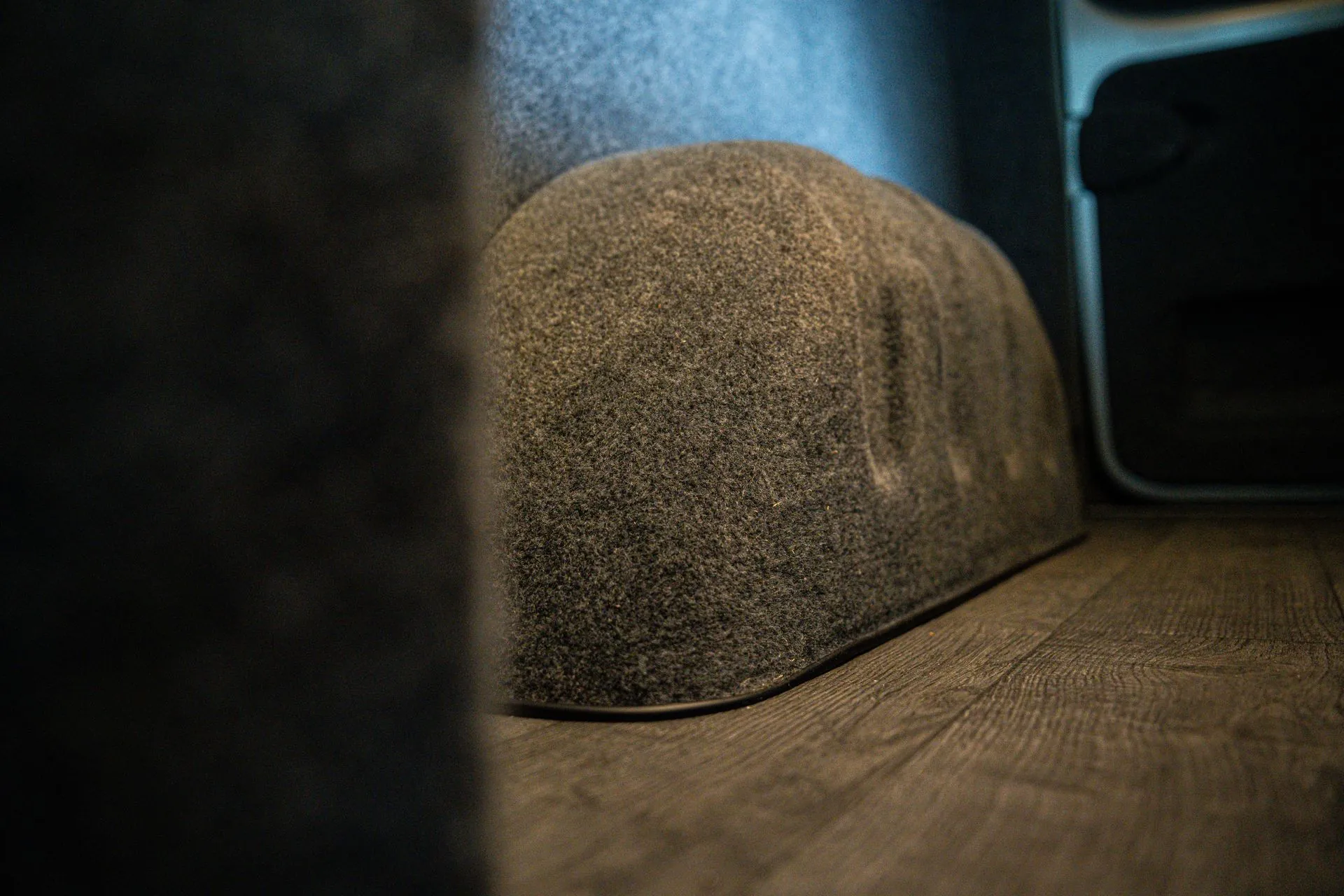
We started with our luxury sound-deadening, insulation and carpet lining package: Dodo Dead'n sound deadening in the main cavities and wheel arches, Dodo Thermo liner, Thermo-Fill insulation and full carpet lining across the walls and the roof. With the standard roof retained, we insulated and lined it as part of the same package. The finished van is warm, quiet and doesn't feel like a metal box from the inside.
Power for work and weekends
The van has our 12V and 240V electrical package with a lithium leisure battery: lighting, 12V and USB charging, 240V sockets, and a 240V hook-up for sites and campsites that have one. The leisure battery supplies the 12V lighting and charging points away from a hook-up; the 240V sockets are available when connected to mains power.
Airflow with the doors closed
A MaxxFan Deluxe roof fan is fitted, with a remote control. It's the detail that makes overnight stays in a closed van work: the fan can draw air in or push it out, so on a hot night it pulls cool air through, after cooking it clears the van, and it runs quietly enough to leave on overnight. Because it's rain-shielded it can stay open in bad weather.
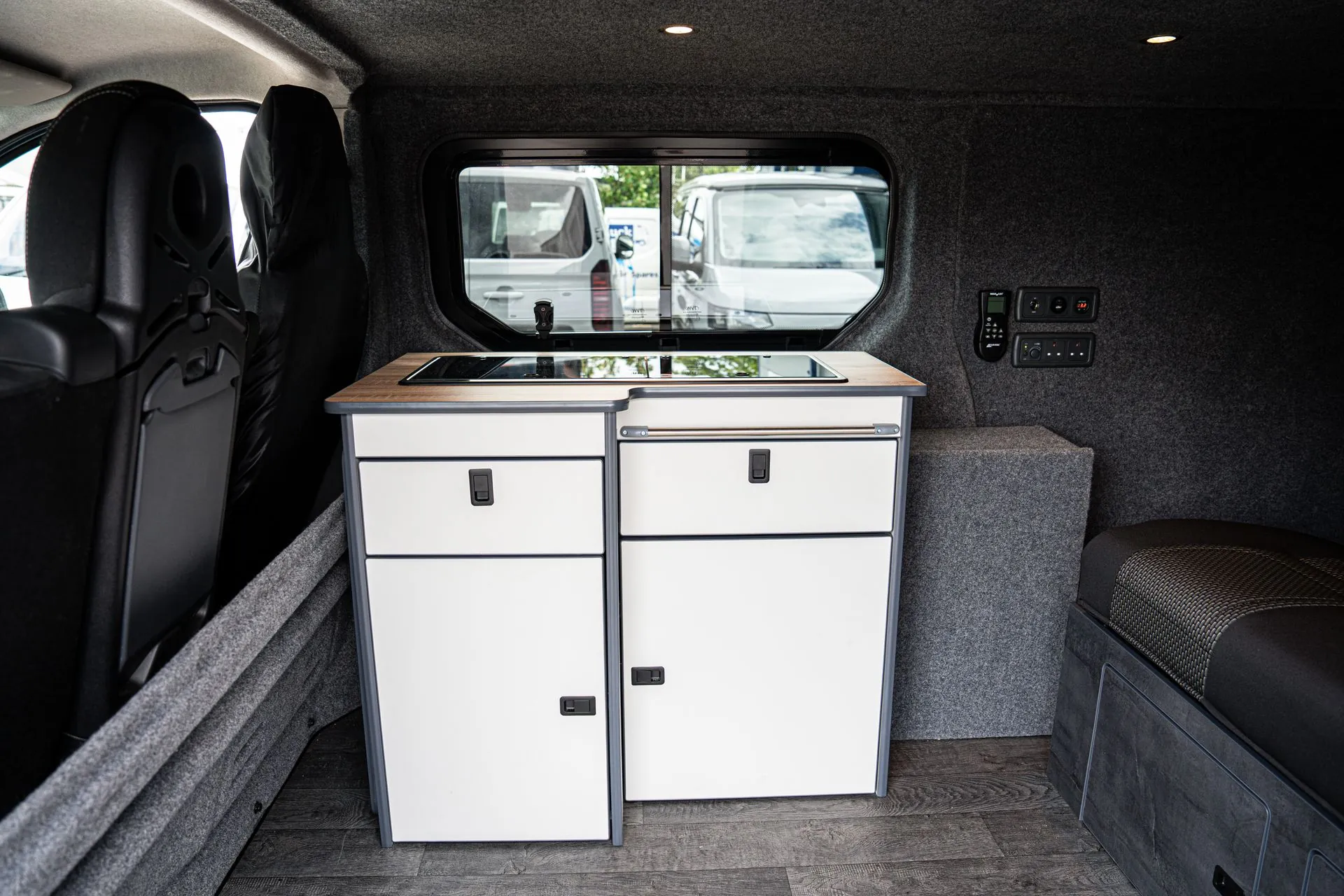
We also fitted a single sliding side window behind the driver's seat, directly beside the kitchen pod. The opening window and roof fan work together to help ventilation while cooking. It's the only glazing in the rear — one window, where it's needed, and the rest of the van stays a panel van from the outside.
A compact kitchen pod
Instead of full-length cabinets down the side of the van, we fitted one of our campervan kitchen pods — a single, compact unit with a two-burner gas hob, a sink and an integrated gas locker built in. It gives him everything he asked for — a hot meal, a kettle, a place to wash up — in a fraction of the space and cost of a full kitchen, and it leaves the rest of the load area open for whatever the week needs.


A proper bed, ready in seconds
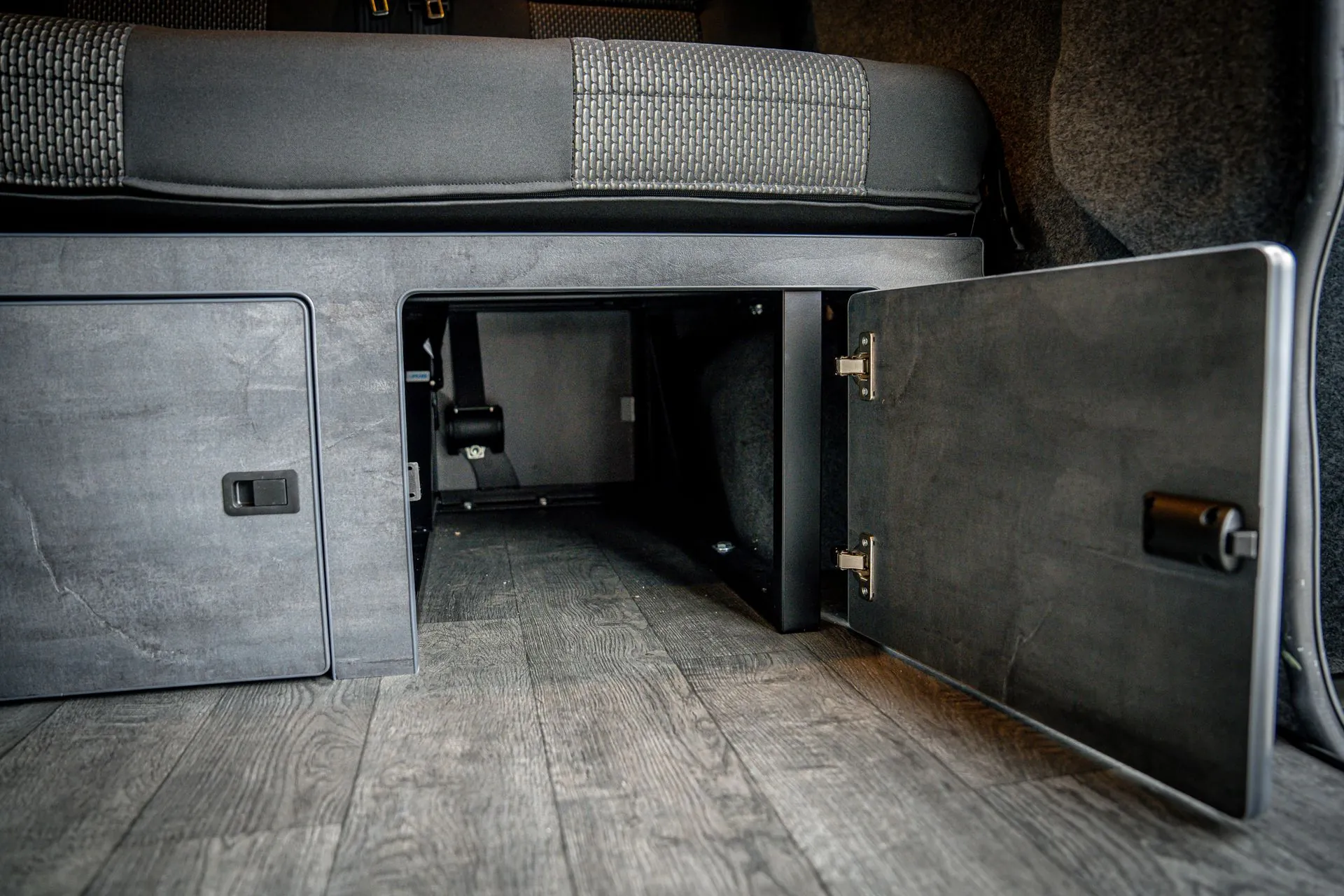
The bed is a RIB seat/bed — two crash-tested, belted rear seats for travelling that fold flat into a full double in seconds. For a solo traveller it's ideal: a proper seat when someone comes along, a proper bed every other night, and no faffing about with boards and cushions after a long day.
Storage doors beneath the seat keep useful space accessible without adding a full run of side cabinets.
Practical space, inside and out
A Fiamma F45S wind-out awning gives covered space outside the sliding door — somewhere to sit on a summer evening, or to keep the rain off while the door's open and dinner's cooking.
The floor is Altro Jacobean Oak — a darker oak-effect commercial safety floor. It's the right choice for a van that gets used for work: it hides the dirt from site boots, it wipes down, and it warms the whole interior against the carpet lining.

Design decisions
Spend where he'll notice it, not where he won't.
The two things that make a van comfortable to sleep in are how warm and quiet it is and whether the air moves. So the lining package and the MaxxFan were non-negotiable, and the pop top and full cabinets were left out. The budget went into the bed, lining and ventilation that mattered to this client.
No pop top — deliberately.
One person, one bed. A pop top would have added weight and cost for a berth he'd never use, and a raised roof makes a van obviously a camper. On a job site or a quiet street, a standard-height van that looks like a work van is the more useful one — which is also why we fitted just one window rather than glazing the whole rear.
A kitchen pod instead of cabinets.
A full kitchen is the right answer for a family camper. For someone who takes a bag and a laptop, a pod with a hob, sink and gas locker does the same job in less space, keeps the load area flexible, and is easier to keep clean.
RIB bed for speed.
The conversion from seat to bed takes seconds. On a work night, the van goes from driving to sleeping in the time it takes to put the kettle on.
MaxxFan with reversible airflow, plus one opening window.
Sleeping with the doors shut in a well-insulated van needs proper ventilation. The MaxxFan pulls fresh air in or pushes stale air out at the touch of a remote, deals with cooking steam and condensation, and can stay open in the rain. The sliding window next to the pod gives cross-flow when the hob's on — air in at the window, out through the fan.
Lithium rather than lead-acid.
For a van that sits at jobs for a night or two and then does a long drive, a lithium leisure battery makes sense: more usable capacity from a smaller, lighter battery, and it charges quickly on the move.
Lined roof and Jacobean Oak floor.
Both are comfort-and-durability choices for a working van: the lined roof for warmth and quiet, the darker floor for hiding a week's worth of site dirt.
Nothing he wouldn't use.
No fridge, no diesel heater, no full kitchen, no pop top. Each of those is the right call for plenty of customers; for this one they'd have been cost sat in the van doing nothing. If his use changes, we can discuss suitable additions.
Because the spec was simple and well defined, the van was with us for just two weeks from drop-off to handover.
The full specification

Ready for the road
Two weeks after drop-off, the Trafic was ready for work trips and weekends away. The finished conversion keeps the load area flexible while adding a double bed, compact cooking facilities, ventilation and the lining and flooring needed for regular use.